

How to read a Louis Vuitton date code
A Louis Vuitton date code records a production period and, where letters are present, a factory reference. For the common 1990–2006 format, digits one and three give the month; digits two and four give the year. From 2007, digits one and three give the week instead. Codes from the 1980s use a different order: year first, then month.
Two bags can carry the same date code. So can a genuine bag and a counterfeit. The useful question is whether the marking fits the model, materials and construction you are looking at.
See the full Louis Vuitton authentication guideThe date-code formats, side by side
Year, then month
February 1988
88 gives the year. 2 gives the month. Factory letters can appear before or after the digits in vintage formats.
Month and year
December 2005
Digits 1 and 3 make 12. Digits 2 and 4 make 05. Read the year before choosing the month or week rule.
Week and year
Week 25 of 2019
Digits 1 and 3 make 25. Digits 2 and 4 make 19. A week code does not specify a particular day.
Peach = month or weekGreen = yearGrey = factory reference
| Period | Marking | How to use it |
|---|---|---|
| Before the early 1980s | No standard date code | An older item can have no code. Check its materials, construction and model history against the claimed age. |
| 1980s | Three or four digits; factory letters on some markings | Read the first two digits as the year and the remaining digits as the month. The checker covers 1982–1989 conventions; unusual transition markings need individual review. |
| 1990–2006 | Factory prefix + four digits | Alternating month/year digits. A month must be 01–12. |
| 2007–early 2021 | Factory prefix + four digits | Alternating week/year digits. A number outside 01–53 cannot be a week; week 53 needs closer calendar review. |
| 2021 transition and newer bags | Embedded chip on many items | No visible code is common. A decoded 2021 marking still needs to fit the item and transition period. |
Where is the date code on your Louis Vuitton bag?
Start inside the pockets and along their seams. A code may sit on a small leather tab, behind a loose pocket or directly in the lining. The position changes with the model, material and production period.
Empty the bag and use light from the side. Lift loose tabs gently; don’t pull apart a seam or force a pocket lining out. A rubbed suede stamp can disappear in a straight-on photo and become readable when the light moves.
A removable pouch is a separate piece. Record its code separately from the bag’s.
Neverfull
On many canvas versions, look beneath the inside zipped pocket for a small leather tab in the seam. Check the bag and removable pouch separately.
Use the matching version. A newer chip-era bag may have no visible code here.
Find the pocket before the code.
Code locations follow the construction of the bag. A bucket bag and a compartmented satchel need a different approach.
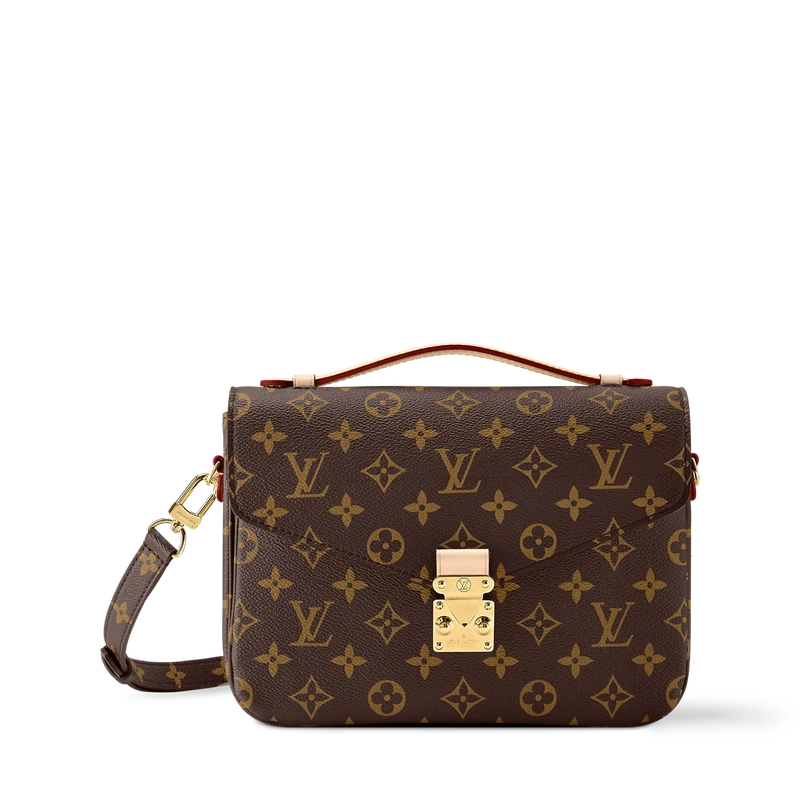
Turn the bag around.
On stamped-code versions, start inside the zipped pocket on the back. Looking only through the main compartments can leave this pocket unchecked.
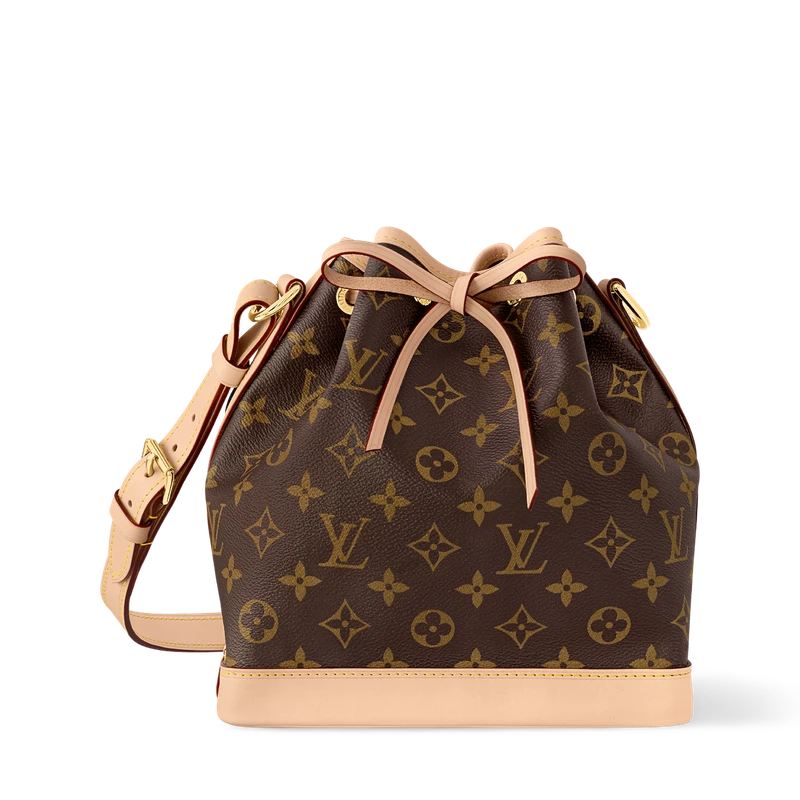
Follow the interior seams.
Empty the bag, loosen the drawstring and open the top fully. On stamped-code versions, inspect the interior seam tabs and lining with light from the side.
Very early Noé bags can predate standard date codes. A later purchase date also does not establish the production year.
Find the starting point for your modelModel photographs illustrate the bag’s construction. They do not show a date stamp or establish the code location for every production year.
Date-code locations by model
These are places to check on stamped-code versions. Material, lining and production changes affect the position; a newer chip-era example may have no visible stamp.
| Model | Start here | Check before comparing |
|---|---|---|
| Neverfull | Beneath the inside zipped pocket, on a small leather tab in the seam. | The detachable pouch has its own marking. Do not substitute its code for the tote’s. |
| Speedy and Speedy Bandoulière | Beneath the loose interior pocket and at its attachments; inspect the leather tabs. | Use the matching lining and era. A code position on a current model does not establish the position on a vintage Speedy. |
| Alma | Inside the interior pocket and along the lining seam. | Some older versions have a marking directly in the lining. A faded stamp can be harder to see than a leather tab. |
| Pochette Métis | Inside the exterior zipped pocket at the back, on a leather tab. | Check the back pocket before concluding that the bag has no code. |
| Wallets | Behind card slots and along accessible inner pocket edges. | Do not stretch a slot or separate the lining to expose a marking. |
| Pochette Accessoires | Inspect the upper interior seam for a leather tab or a stamp directly in the lining. | |
| Mini Pochette Accessoires | Check the small leather tab inside. Its code belongs to this pouch, not another bag. | |
| Multi Pochette Accessoires | Inspect the large pochette’s lining and seam tabs. Record each detachable piece separately. | |
| Keepall | Look at the riveted interior tabs beside the zip. Vintage stamps can occupy two lines. | |
| Noé | Inspect interior seam tabs and the lining itself. Very early examples may predate date codes. | |
| NéoNoé | Look inside the central zipped compartment for a small leather tab. | |
| Artsy | Inspect the wall pockets and the area beside the zipped pocket for a tab or lining stamp. | |
| Galliera | Follow the interior pocket edges into the deep side seams. | |
| OnTheGo | Check the interior zipped pocket for a leather tab on stamped-code versions. | |
| Musette | Examine the Alcantara lining for an impressed stamp. Wear can make it faint. | |
| Papillon | Look below the zip, near the branding stamped in the brown lining. | |
| Zippy Wallet | Inspect bill-compartment seams, behind card slots and beside the zip. | |
Why your Louis Vuitton bag may have no date code
No visible date code does not mean a Louis Vuitton bag is fake. Its age, lining and repair history can explain why the stamp is absent. Start with the situation that fits your bag.
A visible stamp may give the production period. Wear or a replaced lining can obscure it.
An embedded chip is not a readable date stamp. This tool cannot access its manufacturer records.
Newer bags often have a chip
Many bags made after the 2021 changeover have an embedded chip rather than a visible date code. A purchase date alone does not tell you when the bag was made: older stock can be sold later.
A phone detecting a chip is not an authentication result. Don’t cut into the bag to find it.
What if the date-code result doesn’t match the bag?
The code won’t read
Check the actual stamp against your typed version. Look closely at 0 and O, 1 and I, and faded 5s or 8s. Keep line breaks in your photo even though you enter the characters together. This checker removes spacing; it never silently changes letters into numbers.
The seller gives a different year
Ask whether they mean production or purchase. A bag made in 2005 can have a receipt from 2006. A claim that it was made in 2006 is different. Keep the listing and the complete code photograph together.
The factory country differs
Check the “made in” stamp, then the letters. Some factory references overlap countries; published lists are not complete workshop records. A replaced lining also needs to be considered before assigning a date or country to the original bag.
The bag and pouch have different codes
Photograph both markings and establish which piece each belongs to. A pouch, strap or lock can be replaced or paired with another bag. Its marking does not establish the origin of the main item.
Louis Vuitton factory-code reference
The letters are a factory reference, not a unique bag identifier. This is a historical reference list, not access to Louis Vuitton’s records. Overlapping codes appear in every applicable country row; an unlisted code needs review, not an automatic “fake” result.
| Country | Factory references |
|---|---|
| France | A0 A1 A2 AA AAS AC AH AI AN AO AR AS AX BA BE BJ BU CI CO CT CV CX DR DT DU ET FA FL FR GR IT LA LM LW MB MI MO MS MX ND NO OS OU RA RE RI SA SD SF SL SN SP SR TA TH TJ TN TR TS VI VR VX |
| Italy | AO BA BC BO CE DF FA FN FO LE MA NQ NZ OB PL RC RE RO SA ST TD |
| Spain | AC BC CA CO CR GI LB LM LO LW MO UB |
| USA | FC FF FH FL LA OS SD TX |
| Switzerland | DI FA TC TO |
| Germany | LP OL PB PO |
SD and FL appear under France and the USA; BC under Italy and Spain; FA under France, Italy and Switzerland. Some associations are shared across references and others conflict. The checker shows every listed alternative, without assigning a country from the letters alone.
Check the canvas, stamp, hardware and construction with our illustrated Louis Vuitton guide.
Louis Vuitton date codes: your questions
Is this a Louis Vuitton serial number checker?
This tool reads Louis Vuitton date codes, often called serial numbers in listings. A date code describes a production period and factory reference; several bags can share it. It cannot retrieve an individual bag’s ownership or purchase history.
Does a valid date code mean my Louis Vuitton bag is real?
No. A counterfeit can carry a code that decodes correctly. The result tells you what the marking reads; authenticity depends on the bag’s materials, construction and details. Our Louis Vuitton authentication guide explains what to examine alongside the code.
Why does my Louis Vuitton bag have no date code?
It may be a newer chip-era item, an older piece from before standard codes, or a bag with a worn marking or replaced lining. First check the pockets and tabs for your model. Use the missing-code section to work through the possibilities.
Can I look up a Louis Vuitton microchip online?
This checker cannot retrieve manufacturer records from a chip. A phone scan can detect a tag without establishing who made the bag. A website opening from a tag is not proof of authenticity either; inspect the item itself.
What do DK and OK mean on a Louis Vuitton code?
DK and OK are reported repair markings. They should not be treated as the original production date of the bag. Match any repair paperwork to the lining or component that was replaced.
Can two authentic Louis Vuitton bags have the same date code?
Yes. Date codes are not unique serial numbers, so matching codes on different bags are possible. A copied code also appears on counterfeits; uniqueness is not an authenticity test.
Why does the checker show more than one country?
Some factory letters appear under more than one country in historical references. The checker displays those alternatives rather than guessing. Compare the complete marking with the bag’s “made in” stamp and production period.
Does the checker give an exact manufacturing date?
No. The standard code conventions give a month or week and a year. They do not identify a particular day. This checker keeps the week number instead of presenting a calculated calendar range as a confirmed manufacturing date.
Is checking my code free?
Yes. The Louis Vuitton date code checker and its reference guide are free to use. No account or photograph upload is needed.
Can I use this for shoes, sunglasses or a hard-sided trunk?
This checker covers common leather-goods date-code conventions. Product references and identifiers on other categories can use different systems. A code that falls outside this tool’s coverage is not a verdict on the item.